Tim's Trailblazer campaign has recently resumed, and we've picked up two new players from the Traveller game. They've been... somewhat confused, though. Here's a brief summary of everything we (the players) know about Tim's world (I'll add a map if and when I can get a scan of Tim's paper map).
Timeline (dated YBN - Years Before Now):
>5000 YBN - The Chromata, a group of five dangerous artifacts, are created. We have one of them - Mavrilith the Spelldrinker, a black blade. Also known are a white shield (Breath of the Dead), blue suit of mail (don't remember name, illusion properties), green something (the Gentle Master - enchantment of some kind), and red something (the Mind's Anchor or something similar). Each is, at the present time, guarded by a dragon of the same color, except for black and white. We slew the black dragon and took the black Chromata, and the white shield is known to be in the hands of the enemy (more on him later). Art objects recovered from the hoard of the black guardian predate recorded history, but also bear the likenesses of forgotten human emperors; this gives rise to speculation that the chromata are of human origin, and lays to rest earlier theories that they might be draconic in origin (which stemmed primarily from the fact that their guardians were dragons).
~5000 YBN - The Elf-Gnome War. High elven masters of enchantment vs gnomish masters of illusion. Both civilizations effectively destroyed during a prolonged war of tricks and deception. The region of unstable magic known as the Impasse is created as a last gnomish superweapon illusion. It's a funky place.
5000 > x > 40 - Other civilizations develop. City State of Dehlia founded by humans. Kathras Deep founded by dwarves. Araduin Hills settled by halflings. Duskvale, Malas Farngrey, and Mekbah founded by humans. Lizardman empire of Sol Magnar founded in the southern deserts (believed to have been founded earlier than these others, as they possessed data on the chromata in their libraries).
~30-40 YBN - The Goblin Wars. Goblins invade the settled southlands from the Nordham Reaches; dwarves largely repulse them from their territory. Halfling homeland of Araduin Hills burns, primary population center moved to fortified Hollowtown of Three Rivers. The involvement of the humans of the City-State of Dehlia is uncatalogued, but there's a reason the city has some pretty serious walls, I suspect...
~20 YBN - Kathras Deep burned by Anaximath the Red Terror, who sets up a lair there. Fjolkir goes mad, lives out in the woods.
~5 YBN - Gygas the Black crushes the town of Duskvale, sets up a lair there with his brood.
~1-2 YBN - Information on the Chromata surfaces. The Black 13, a splinter cabal of gnomes who survived the war outside the Impasse, becomes aware of an elven artifact of significant power. They use their ties with Malakax University of Dehlia to send Ythir, a human illusionist, to go get it for them. Ythir gathers a band of companions including Qual, a surviving (but largely clueless) high elf, and retrieves the artifact. Upon its return to the Black 13, it devours one of them and transforms into the High Elf King, kills several more, laughs maniacally, and teleports to parts unknown. Ythir is contacted by Two of the Black 13 and told of the Chromata; he makes their acquisition his goal (I believe in order to fight the elf king... not really sure though). This is also the first time that rumor of the chromata appears, historically; there is speculation about a mysterious force implementing a time delay of some sort on the dissemination of this information. For more information, see this post.
~0.06 YBN - Three Fists of Dehlia form. Two, alias Adam the Bard, creates several faux Rods of Wonder and uses them to erase the memories of several parties of adventurers. He sends these parties, each working under the name The Fists of Dehlia, after the chromata. Fists 1, comprised of Barradin Took, Fjolkir the Beardless, Somak the Druid, and Alonso the Thief slay Gygas, then manage to defeat the Rod and Two's influence, claiming the black chromata for themselves. Ythir appears and tries to take it from them, but is likewise defeated (but permitted to live). Alonso disappears mysteriously, and Somak sacrifices his life to close a portal to hell after regaining his memories. Fists 2, comprised of the Mighty Shin-Yao, Karath the Quiet, and several unknown (deceased) others, slays the white guardian, but are subsequently defeated by Two / Adam; the white chromata falls into his hands. The target, composition, and success or failure of Fists 3 is unknown.
0 YBN - Free Fists of Dehlia formed when Barradin, Fjolkir, Shin-Yao, and Karath meet by happenstance in Malas Farngrey, City of Temples, and decide to join forces. They choose the green dragon of Helheim Woods, believed to guard the green chromata, as their next target. The Elf King is discovered to have taken control of the City of Dehlia, and is believed to be using mind control magics on its population (due to reports of willing cooperation of criminal elements with the new regime).
So that's the timeline we're working with... Here's a list of PC-threat dangerous NPCs expected to recur:
Ythir the Illusionist - He's after the chromata, and probably has some kind of devious master plan. Thanks, Jared. Illusionist 9 when last a PC; when last encountered by PCs, most potent traditional spell (ie, not Tim handwaving) witnessed was Resilient Sphere, so no clear increase in power. Expect this to be remedied when next we meet him.
Adam / Two - Gnome bard / illusionist or something... Appears to have distributed copies of himself via the Rods of Brainfuck. Also has the capability to erase and modify memory. Believed to have two 'copies' on the loose; one has the white shield taken from Fists 2, the other is expected to be with Fists 3. As with all distributed systems, I expect he has at least one more backup somewhere...
The Elf King - Capabilities largely unknown, but disintegration and teleport suggest spellcasting of >= 11th arcane caster level. And since it was technically a quickened split ray disintegrate, possibly much, much higher...
Hethras the Vampire - Vampire Monk; energy drain unarmed strikes urrrgh... He knows we have the black chromata. Combat opportunist; has aided us previously when it was in his own interests, but has also showed up at inopportune times to try to kill us and take Mavrilith. Expect him to show up for bossfights and possibly backstab us.
Somar the Savage - Somak's half-brother, an orc barbarian / druid chieftain (have witnessed Wild Shape + Rage, so we know he's at least Druid 5 and Bbn 1). Responsible for the burning of Druidtown, possibly with aid from Ythir (last known possessor of the Black Lotus Dagger, which Somar used during his assault).
Seche Peret - Dehlian halfling mob boss. Formerly a (dangerous) patron of sorts of Aluna the Sorceress (believed to have been a member of Fists 2; her last stated objective was to acquire the white chromata. Possibly deceased, possibly future ally. She and Barradin would get along splendidly), now believed mind-controlled by Elf King.
Asmir the Assassin - Last known to be hunting Ythir; expected to reappear, but unknown whether as an ally or an enemy. Rogue 5 / Assassin 4 when last a PC. Master of disguise; could be anyone we meet.
Anaximath - Not technically a recurring hostile, but expect to fight her. Mature Adult or stronger red dragon. 's gonna be a good one.
Mavrilith - Come on guys, it's a sentient black sword that thirsts after all magic. How can this possibly not come back to bite us in the ass at some point?
Possible high-power NPC allies (mostly good-ish aligned PCs from last campaign):
Qual High-Elven - High elf ranger, and last of the (known) high elves besides the Elf King. Original creator of Qual's Feather tokens. Unfortunately, he's forgotten a lot in his 5000 years... Last known objective was going south across the sea in search of old elven libraries for data on Chromata.
Miranda - Dwarven paladin from the Hammer Temple of Dehlia; child of dwarven refugees from the burning of Kathras Deep. Last known objective was to aid the Singed Brigade in the containment of Anaximath.

Friday, March 30, 2012

Tuesday, March 27, 2012
Dwarf Fortress and the OSR
I've been a little quiet around the blogosphere lately with reading and commenting. There are two reasons for this. The first and most acceptable is that there's only about a month of school left, so it's crunch time. The second, more problematic reason is that I spent a massive chunk of the last three days playing Dwarf Fortress. It's been a long time since I played any videogames (since I came back this semester, actually, and I didn't really play any last semester either), and DF hit me pretty hard. It's a terrifyingly complex and detailed game with ASCII graphics, headache-inducing levels of micromanagement (or maybe that was a side effect of the graphics), no ways to win, and many, many ways to lose.
In short, it's amazing.
And in some sense, it reminds me of older versions of D&D as opposed to modern versions. When you start playing DF, it generates a world through a simulation of geological processes, then a history of the world with a host of elven, human, dwarven, and goblin civilizations. These then interact during the course of play. The worlds of older editions tended to be similarly living, breathing sandboxes in contrast with modern adventure paths. The ASCII graphics are in some sense analogous to ungridded combat; you're not exactly sure what's going on, and in some sense the details don't matter (though DF does actually simulate hit locations and anatomical injuries to a degree that would not be feasible in any tabletop game). They may also be comparable to the stylistic choices present in many OSR products; dwarves can't be wizards in OSRIC, no halflings in ACKS, and so forth. Micromanagement goes hand in hand with the careful resource tracking often present in old school play, as opposed to the handwaving of ammunition, rations, and torches more common these days.
But the losing is really where the parallel strikes me.
There is a tragic element present in Dwarf Fortress; you know that eventually, your fortress will fall. Your gates will be shattered, your dwarves will die or be driven to barbarism and madness, and your works laid to waste. And yet... you play anyways, and you fight like mad to keep things fortified and in working order. And when the end comes, you watch in horrified fascination as your peasants flood out to the ramparts to watch the besieging goblins only to be perforated by crossbow bolts, or as your mines cave in, or the undead attack and animate your dead against you and your best carpenter is beaten to death by his wife's headless corpse, or your crossbowdwarves go to battle but die without firing a shot because you made them crossbows and bolts, but no quivers. And you curse the pathing AI, or bad luck, or your own foolishness, but at the same time you celebrate, because part of the fun is watching everything burn in ways you never expected. And then you go, "Well alrighty then. Next time, I'm making quivers." And you get stronger. You learn about how the world works by losing. This, if I understand it correctly, is closest to the OSR mode of PC death. Sometimes you were dumb, sometimes you were unlucky, but it doesn't matter, because now you're dead. Learn from this, and enjoy it. Curse and laugh in the same breath. And if you chose to die, if you went "Fuck it, the useful half of my population is dead. Open the gates and let the goblins come! We fight to the last dwarf! I always did wonder how well those traps I installed in the great hall would work," and died fighting the good fight, then more power to you.
But, for now, I must swear off Dwarf Fortress. There is code to be written, and soon! Perhaps come summer, I will play again; I foresee many, many more hours of joyful failure to be found in DF.
In short, it's amazing.
And in some sense, it reminds me of older versions of D&D as opposed to modern versions. When you start playing DF, it generates a world through a simulation of geological processes, then a history of the world with a host of elven, human, dwarven, and goblin civilizations. These then interact during the course of play. The worlds of older editions tended to be similarly living, breathing sandboxes in contrast with modern adventure paths. The ASCII graphics are in some sense analogous to ungridded combat; you're not exactly sure what's going on, and in some sense the details don't matter (though DF does actually simulate hit locations and anatomical injuries to a degree that would not be feasible in any tabletop game). They may also be comparable to the stylistic choices present in many OSR products; dwarves can't be wizards in OSRIC, no halflings in ACKS, and so forth. Micromanagement goes hand in hand with the careful resource tracking often present in old school play, as opposed to the handwaving of ammunition, rations, and torches more common these days.
But the losing is really where the parallel strikes me.
There is a tragic element present in Dwarf Fortress; you know that eventually, your fortress will fall. Your gates will be shattered, your dwarves will die or be driven to barbarism and madness, and your works laid to waste. And yet... you play anyways, and you fight like mad to keep things fortified and in working order. And when the end comes, you watch in horrified fascination as your peasants flood out to the ramparts to watch the besieging goblins only to be perforated by crossbow bolts, or as your mines cave in, or the undead attack and animate your dead against you and your best carpenter is beaten to death by his wife's headless corpse, or your crossbowdwarves go to battle but die without firing a shot because you made them crossbows and bolts, but no quivers. And you curse the pathing AI, or bad luck, or your own foolishness, but at the same time you celebrate, because part of the fun is watching everything burn in ways you never expected. And then you go, "Well alrighty then. Next time, I'm making quivers." And you get stronger. You learn about how the world works by losing. This, if I understand it correctly, is closest to the OSR mode of PC death. Sometimes you were dumb, sometimes you were unlucky, but it doesn't matter, because now you're dead. Learn from this, and enjoy it. Curse and laugh in the same breath. And if you chose to die, if you went "Fuck it, the useful half of my population is dead. Open the gates and let the goblins come! We fight to the last dwarf! I always did wonder how well those traps I installed in the great hall would work," and died fighting the good fight, then more power to you.
But, for now, I must swear off Dwarf Fortress. There is code to be written, and soon! Perhaps come summer, I will play again; I foresee many, many more hours of joyful failure to be found in DF.
Monday, March 26, 2012
Fantasy Traveller - Wilderlander
Wilderlanders are those who spend most of their time out in the woods, either by their own choice or from necessity.
Qualification: End 6+. -1 DM per previous career. -2 DM if 30 years of age or more.
Barbarian: You lived amongst a savage tribe or bandit clan, raiding and fighting for food and power. Might made right, and only the strong survived.
Survival: Str 7+. Advancement: End 5+.
Druid: You lived in perfect harmony with nature, listening to the wisdom of the trees or the waves. You may have lived among a community of druids, as a shaman of a barbarian tribe, or alone as a hermit. In any case, you needed sharp instincts to listen to the spirits, and often great endurance to seek out the wisest of them, who lived in the harshest climes.
Survival: Int 5+. Advancement: End 7+.
Ranger: You were tasked by a civilized society with guarding its borders and exploring far-off lands, or perhaps you were an outlaw all-in-green. In either case, you came to know the woods like the back of your hand, and cultivated a fearsome skill with the bow.
Survival: Int 6+. Advancement: Dex 6+.
Personal development:
Qualification: End 6+. -1 DM per previous career. -2 DM if 30 years of age or more.
Barbarian: You lived amongst a savage tribe or bandit clan, raiding and fighting for food and power. Might made right, and only the strong survived.
Survival: Str 7+. Advancement: End 5+.
Druid: You lived in perfect harmony with nature, listening to the wisdom of the trees or the waves. You may have lived among a community of druids, as a shaman of a barbarian tribe, or alone as a hermit. In any case, you needed sharp instincts to listen to the spirits, and often great endurance to seek out the wisest of them, who lived in the harshest climes.
Survival: Int 5+. Advancement: End 7+.
Ranger: You were tasked by a civilized society with guarding its borders and exploring far-off lands, or perhaps you were an outlaw all-in-green. In either case, you came to know the woods like the back of your hand, and cultivated a fearsome skill with the bow.
Survival: Int 6+. Advancement: Dex 6+.
Personal development:
- +1 Str
- +1 Dex
- +1 End
- +1 Int
- Survival
- Navigation
- Survival
- Melee (Any)
- Missile (Any)
- Animals (Any) or Seafarer
- Navigation
- Athletics (Any)
- Melee (Any)
- Survival
- Athletics (Any)
- Athletics (Any)
- Carouse
- Recon
- Druidism
- Animals (Any)
- Survival
- Melee (Blunt or Unarmed)
- Navigation
- Recon
- Survival
- Melee (Any) or Missile (Any)
- Alchemy
- Navigation
- Recon
- Stealth
- Bandit -> Melee (Any) 1
- Raider
- Barbarian -> Athletics (Any) 1
- Wolf Brother
- Berserker -> Druidism 1 or +1 Str
- Beast-in-Man's-Flesh
- Awakened -> Recon 1
- Speaker with Bees
- Druid -> Druidism 1
- Greenspeaker
- Elder Druid -> Druidism 2 or +1 Int
- One-With-All
- Hunter -> Missile (Bow) 1
- Outrider
- Ranger -> Navigation 1
- Explorer
- Master Ranger -> Stealth 1 or +1 Dex
- Greenshadow
Saturday, March 24, 2012
Mailbag 6: Miscellanea
games workshop bfg resources: Yeah, GW took down all the BFG and other specialist games pdfs like... yesterday. I don't know why either. I have most of the BFG pdfs, but don't have hosting; drop me a line in the comments if you want 'em.
mongoose traveller learning new skills: I guess I probably haven't really discussed this before. Basically, learning new skills in MgT is slow, but doable. Raising a skill from level n to level n+1 takes a number of weeks of training equal to the total of all of your skills plus n+1 (to gain a new skill at 0, treat n as -1). Since about the only training you get happens in jump, an experienced character is like to pick up maybe 2 new skills over the course of a short campaign like the ones we play. On the other hand, if you start the campaign with a rank newbie with a skill total of 3, you learn really damn fast, and since you get to choose your training skills (but not your skills from character generation), this also provides a character who can do exactly what you want him to be doing. Avoids the risk of aging, too, but you lose out hard on material benefits.
As an aside, we have a houserule that if you roll snake eyes on a check with an untrained skill, it counts as a week of training. Experiential learning, if you will.
mongoose core weight: I think this is referring to encumbrance, probably (since I don't know what the actual paper copy of the Core weighs). The rules for it are on page 104, and I highly recommend using them. Otherwise everyone ends up in Combat Armor with laser rifles and things go all to hell.
mongoose traveller where does the ship exit jump space?: So, there aren't actually hard and fast rules on this. The only guideline I know of is from page 141:
Short version: Wherever you want them to, with the guideline that success means close and failure means far.
mongoose traveller learning new skills: I guess I probably haven't really discussed this before. Basically, learning new skills in MgT is slow, but doable. Raising a skill from level n to level n+1 takes a number of weeks of training equal to the total of all of your skills plus n+1 (to gain a new skill at 0, treat n as -1). Since about the only training you get happens in jump, an experienced character is like to pick up maybe 2 new skills over the course of a short campaign like the ones we play. On the other hand, if you start the campaign with a rank newbie with a skill total of 3, you learn really damn fast, and since you get to choose your training skills (but not your skills from character generation), this also provides a character who can do exactly what you want him to be doing. Avoids the risk of aging, too, but you lose out hard on material benefits.
As an aside, we have a houserule that if you roll snake eyes on a check with an untrained skill, it counts as a week of training. Experiential learning, if you will.
mongoose core weight: I think this is referring to encumbrance, probably (since I don't know what the actual paper copy of the Core weighs). The rules for it are on page 104, and I highly recommend using them. Otherwise everyone ends up in Combat Armor with laser rifles and things go all to hell.
mongoose traveller where does the ship exit jump space?: So, there aren't actually hard and fast rules on this. The only guideline I know of is from page 141:
When the ship exits Jump space after an accurate Jump, it tendsThat's all there is on it. Jump accuracy is determined on the bottom of the left-hand column on the same page.
to arrive close to the target world, but outside or on the verge of
the hundred-diameter limit. Inaccurate Jumps just dump the ship
somewhere in the inner system, requiring a long space flight.
Short version: Wherever you want them to, with the guideline that success means close and failure means far.
Friday, March 23, 2012
Fantasy Traveller - Rogue
Rogues are vagrants who lie, beg, cheat, steal, or swindle for a living.
Qualification: Dex 6+. -1 DM per previous career.
Assassin: You worked as a murderer for hire, likely as part of a criminal organization or religious cult, or in the service of an unscrupulous noble. Maintaining a cover identity and reaching your targets required stealth and guile, while deadly strikes and a quick escape mandated agility and speed.
Survival: Int 7+. Advancement: Dex 5+.
Minstrel: You wandered from place to place, playing before noble audiences in exchange for food and a place to sleep. However, such nobles are often quite protective of their daughters, and you were often forced to leave rather... abruptly, and so mastered the arts of hiding and evading pursuit. You depended on knowing people and ability to interact with the nobility for food, and quick thinking to get out of tough spots (plus, clever jesters are the best jesters).
Survival: Soc 5+. Advancement: Int 7+.
Thief: You stole things. Lots of things. Pretty much anything that wasn't nailed down, really. Flexibility and agility were important for going places you weren't supposed to be, and keen powers of observation for picking valuable things to steal.
Survival: Dex 6+. Advancement: Int 6+.
Personal Development:
Qualification: Dex 6+. -1 DM per previous career.
Assassin: You worked as a murderer for hire, likely as part of a criminal organization or religious cult, or in the service of an unscrupulous noble. Maintaining a cover identity and reaching your targets required stealth and guile, while deadly strikes and a quick escape mandated agility and speed.
Survival: Int 7+. Advancement: Dex 5+.
Minstrel: You wandered from place to place, playing before noble audiences in exchange for food and a place to sleep. However, such nobles are often quite protective of their daughters, and you were often forced to leave rather... abruptly, and so mastered the arts of hiding and evading pursuit. You depended on knowing people and ability to interact with the nobility for food, and quick thinking to get out of tough spots (plus, clever jesters are the best jesters).
Survival: Soc 5+. Advancement: Int 7+.
Thief: You stole things. Lots of things. Pretty much anything that wasn't nailed down, really. Flexibility and agility were important for going places you weren't supposed to be, and keen powers of observation for picking valuable things to steal.
Survival: Dex 6+. Advancement: Int 6+.
Personal Development:
- +1 Int
- +1 Dex
- +1 Soc
- Gambler
- Jack of Trades
- Carouse
- Stealth
- Deception
- Streetwise
- Recon
- Melee (Rogue Weapons)
- Athletics (Dexterity)
- Stealth
- Deception
- Alchemy or Wizardry
- Missile Weapons (Any)
- Melee (Rogue Weapons)
- Athletics (Dexterity)
- Diplomat
- Art (Any)
- Carouse
- Jack of Trades
- Melee (Any)
- Advocate
- Stealth
- Deception
- Mechanic
- Streetwise
- Melee (Rogue Weapons or Unarmed)
- Persuade
- Cutthroat -> Melee (Rogue Weapons) 1
- Initiate
- Assassin -> Stealth 1
- Master Assassin
- First Assassin -> Wizardry 1 or +1 Int
- Left Hand of Darkness
- Fool -> Carouse 1
- Performer
- Minstrel -> Art (Any) 1
- Troubadore
- Court Jester -> Advocate 1 or +1 Soc
- Virtuoso
- Footpad -> Streetwise 1
- Cutpurse
- Thief -> Stealth 1
- Burglar
- Master Thief -> Recon 1 or +1 Soc
- "Retired"
Thursday, March 22, 2012
Starmada Nova Review - First Impressions
As I mentioned on Wednesday, Starmada Nova just recently came out. I have picked it up, perused it, and started working on a ship construction spreadsheet for it (because hey, those are handy), but I haven't managed to get in a game of it yet. As a result, this review is necessarily incomplete, and will be supplemented by playtest reports in the future.
The game is definitely stripped-down from the Admiralty Edition. There's a significant emphasis on the use of markers on the board, which is somewhat problematic for us, actually, since we can't very well print on cardstock with the campus printers. Guess we'll have to tape more things to pennies.
The new firepower system is mathematically more sound than the old accuracy system, I believe - any given plus or minus one modifier to firing multiplies the effectiveness of the fire by a factor of sqrt(2), whereas previously your percent gain varied depending on where you started. This way is tricky to figure by hand, but easily done by programs beforehand. This also fixes the old Repeating problem. The defenses in shipbuilding also operate on multiples of square roots of 2; this is elegant, and makes pricing easy, but again we run into logarithms in shipbuilding. Of the new defenses, I'm rather enamored with Armor, since it's supremely reliable - you're guaranteed to negate exactly n points of damage if you buy n points of armor. ECM and Shields are less predictable (and can be circumvented by Fire Control and Piercing, respectively), and their effectiveness declines as you take damage.
Fighters got nerfed pretty hard; there are only six fighter traits, and they don't change the values that much. Fighter flights can also only take 2 hits. On the plus side, they're half the SU they were in AE. There are also guidelines for deploying them within a certain distance of their carrier, which is actually pretty nice. Independent fighters are not supported. Fighter movement is still after ship movement, but fighter firing is interleaved, which means you get a chance to fire point defense (or not), and may have to choose.
Strikers are gone. Seekers are still around under the guise of drones, which have been modified similarly to fighters. You can also build custom seeking weapons, but... they didn't operate quite how I expected. You launch them at a target in range, and they're placed on the board. Next turn, they impact. In the interim, they can be fired at - the ship they're aimed fires at them at short range, while other friendly ships use the targeted ship as the location of the weapons for purposes of arc and range. This means that dedicated point-defense ships in the center of a group are actually workable now, which is cool. The only thing that gets me here is the timing weirdness - if you fire a Seeking weapon at a target at close range and a target at long range, they both get hit at the same time (next turn). I suppose this is preferable to the "striker launch of doom that you can't dodge" that happened in AE, though, and functionally models projectiles which accelerate rapidly. Ammo weapons are still around, but they're one-shot rather than n-shot, and can't be combined with slow-firing (awww...). They might actually be balanced this time... remains to be seen.
A number of the new special equipments seem to have been included specifically for the SFU supplements, notably shuttles, probes, and tractor beams. Not a huge fan of any of these... The changes to marines are quite good, though; as I mentioned previously, deadweight defensive marines are a thing of the past. Flares are also a nice tactical addition; they let you create hexes of difficult shooting. They're going to be very handy for closing the range, I think.
Cloaking, unfortunately, has been nerfed really, really hard. It now basically models Traveller's black globe generators, sans flicker. While cloaked, your location is known. You can't shoot, and can't be shot at, but can still take hits from mines and asteroids. This is very disappointing to me... I may have to start homebrewing rules for decoy cloaking in Nova (I know I've seen such a proposal for AE on the boards, but I can't find it for the like of me...), because the current cloaking system generates no hidden information at all :(. Since there's no longer hidden plotted-order information either, this is especially sad, since hidden information adds depth. On the plus side, it's definitely easier to manage, and should still serve beautifully as a range-closer.
And I think we might need it. On the one hand, long range weapons are really expensive. On the other hand, the regulation board size is 24 by 18 hexes, and range 30 weapons are now considered core-valid rather than optional. Remains to be seen, and/or houseruled away. This is particularly concerning with the addition of the Long-Range Sensors equipment, which adds a fourth 'extreme' range band at an additional penalty to hit. Scary stuff.
Escorts may also help close the range, though. Line-of-sight blocking ships are in, and it should be pretty neat. The scout ability works specifically as a counter to escorts; it lets you ignore their LOS blocking under certain circumstances. Irksome, because it means that if the enemy fields no escorts, the points you spent on scouts are wasted (the deadweight marines problem again). Still, some interesting possibilities to explore there.
Minefields are smaller than in AE, and can't be deployed at range. They're going to be tricky to use. Overthrusters got a major upgrade, though - they're now a direct clone of the Grumm pivot ability from Hammer and Claw (that's a torso twist to you BattleTech fans). I expect it to see some use to serious effect.
Most of the optional rules aren't anything new, though the Long Shots rule is pretty neat, equipment can now be damaged in Core, and hexless play looks promising. Emergency Thrust now inflicts a guaranteed one point of engine damage, which will likely displease Matt, but it also generates more thrust on average (x1.4 rather than x1.33 expected under AE). Directed Damage is gone, but that's only sensible for this damage system. Plotted Movement is still around as an option, and there are also a bunch of alternate movement systems. Cinematic / basic, naval, and etheric return from AE, while Eldar-style Solar movement and true vector movement (which looks scary) are also included.
Not much in the way of changes to terrain... Asteroid fields look more dangerous, inflicting an average of 1 hull hit per hex moved through. Nebulae are gone, but Dust Clouds are still around. The six scenarios don't appear to have changes significantly, and I've already talked about ship construction (contains logarithms, but looks about right). Tech level is still a thing, but is set at like "X race builds their ships at TL1, end of story" rather than varying by type of thing. The end of the book contains rules for converting Admiralty designs (which were previewed), and a conversion of the fleets from the Imperial Starmada Sourcebook. I think that's a nice touch - while the ISS fleets are hardly the most balanced, and don't do the best job of showing off the new shinies like flares and long-range sensors, having a reasonable selection of ships included in the Core is definitely a good thing for new players compared to AE, where you'd have to either 1) find the MJ12 forums for the Bourbaki Basin and the spreadsheets, 2) grok the shipbuilding rules, or 3) drop more money for one of the fleet books before you could play a serious game. So, while the converted ISS fleets are a hefty chunk of the pagecount, I think that on the whole their inclusion is for the better.
So, overall, looks like a good game. Defenses are varied and strong enough that things should be interesting, and perhaps a little less of the quick-draw type battles we saw sometimes in Nova. Fighters and drones are weak enough that I'm not sure they'll see a lot of play... Gun fleets are likely to dominate our metagame, at least at the beginning, though the small craft are also significantly less expensive than they were in AE. Maybe we'll actually see escort carriers and missile frigates...
As I mentioned up above, I've started working on a spreadsheet for Nova, but it's not production-ready. It is, however, ready enough that I can probably start doing Battlefleet Gothic conversions. And let me tell you, this system looks like it's built for such conversions. Should be a good time, though there also isn't a Drake Notation equivalent established yet, and I'm not about to deal with statblocks that I can't put in text files, no matter how pretty the images may be. So I'll have to cook something up for that before I can start posting...
Edit: Spreadsheet's up
The game is definitely stripped-down from the Admiralty Edition. There's a significant emphasis on the use of markers on the board, which is somewhat problematic for us, actually, since we can't very well print on cardstock with the campus printers. Guess we'll have to tape more things to pennies.
The new firepower system is mathematically more sound than the old accuracy system, I believe - any given plus or minus one modifier to firing multiplies the effectiveness of the fire by a factor of sqrt(2), whereas previously your percent gain varied depending on where you started. This way is tricky to figure by hand, but easily done by programs beforehand. This also fixes the old Repeating problem. The defenses in shipbuilding also operate on multiples of square roots of 2; this is elegant, and makes pricing easy, but again we run into logarithms in shipbuilding. Of the new defenses, I'm rather enamored with Armor, since it's supremely reliable - you're guaranteed to negate exactly n points of damage if you buy n points of armor. ECM and Shields are less predictable (and can be circumvented by Fire Control and Piercing, respectively), and their effectiveness declines as you take damage.
Fighters got nerfed pretty hard; there are only six fighter traits, and they don't change the values that much. Fighter flights can also only take 2 hits. On the plus side, they're half the SU they were in AE. There are also guidelines for deploying them within a certain distance of their carrier, which is actually pretty nice. Independent fighters are not supported. Fighter movement is still after ship movement, but fighter firing is interleaved, which means you get a chance to fire point defense (or not), and may have to choose.
Strikers are gone. Seekers are still around under the guise of drones, which have been modified similarly to fighters. You can also build custom seeking weapons, but... they didn't operate quite how I expected. You launch them at a target in range, and they're placed on the board. Next turn, they impact. In the interim, they can be fired at - the ship they're aimed fires at them at short range, while other friendly ships use the targeted ship as the location of the weapons for purposes of arc and range. This means that dedicated point-defense ships in the center of a group are actually workable now, which is cool. The only thing that gets me here is the timing weirdness - if you fire a Seeking weapon at a target at close range and a target at long range, they both get hit at the same time (next turn). I suppose this is preferable to the "striker launch of doom that you can't dodge" that happened in AE, though, and functionally models projectiles which accelerate rapidly. Ammo weapons are still around, but they're one-shot rather than n-shot, and can't be combined with slow-firing (awww...). They might actually be balanced this time... remains to be seen.
A number of the new special equipments seem to have been included specifically for the SFU supplements, notably shuttles, probes, and tractor beams. Not a huge fan of any of these... The changes to marines are quite good, though; as I mentioned previously, deadweight defensive marines are a thing of the past. Flares are also a nice tactical addition; they let you create hexes of difficult shooting. They're going to be very handy for closing the range, I think.
Cloaking, unfortunately, has been nerfed really, really hard. It now basically models Traveller's black globe generators, sans flicker. While cloaked, your location is known. You can't shoot, and can't be shot at, but can still take hits from mines and asteroids. This is very disappointing to me... I may have to start homebrewing rules for decoy cloaking in Nova (I know I've seen such a proposal for AE on the boards, but I can't find it for the like of me...), because the current cloaking system generates no hidden information at all :(. Since there's no longer hidden plotted-order information either, this is especially sad, since hidden information adds depth. On the plus side, it's definitely easier to manage, and should still serve beautifully as a range-closer.
And I think we might need it. On the one hand, long range weapons are really expensive. On the other hand, the regulation board size is 24 by 18 hexes, and range 30 weapons are now considered core-valid rather than optional. Remains to be seen, and/or houseruled away. This is particularly concerning with the addition of the Long-Range Sensors equipment, which adds a fourth 'extreme' range band at an additional penalty to hit. Scary stuff.
Escorts may also help close the range, though. Line-of-sight blocking ships are in, and it should be pretty neat. The scout ability works specifically as a counter to escorts; it lets you ignore their LOS blocking under certain circumstances. Irksome, because it means that if the enemy fields no escorts, the points you spent on scouts are wasted (the deadweight marines problem again). Still, some interesting possibilities to explore there.
Minefields are smaller than in AE, and can't be deployed at range. They're going to be tricky to use. Overthrusters got a major upgrade, though - they're now a direct clone of the Grumm pivot ability from Hammer and Claw (that's a torso twist to you BattleTech fans). I expect it to see some use to serious effect.
Most of the optional rules aren't anything new, though the Long Shots rule is pretty neat, equipment can now be damaged in Core, and hexless play looks promising. Emergency Thrust now inflicts a guaranteed one point of engine damage, which will likely displease Matt, but it also generates more thrust on average (x1.4 rather than x1.33 expected under AE). Directed Damage is gone, but that's only sensible for this damage system. Plotted Movement is still around as an option, and there are also a bunch of alternate movement systems. Cinematic / basic, naval, and etheric return from AE, while Eldar-style Solar movement and true vector movement (which looks scary) are also included.
Not much in the way of changes to terrain... Asteroid fields look more dangerous, inflicting an average of 1 hull hit per hex moved through. Nebulae are gone, but Dust Clouds are still around. The six scenarios don't appear to have changes significantly, and I've already talked about ship construction (contains logarithms, but looks about right). Tech level is still a thing, but is set at like "X race builds their ships at TL1, end of story" rather than varying by type of thing. The end of the book contains rules for converting Admiralty designs (which were previewed), and a conversion of the fleets from the Imperial Starmada Sourcebook. I think that's a nice touch - while the ISS fleets are hardly the most balanced, and don't do the best job of showing off the new shinies like flares and long-range sensors, having a reasonable selection of ships included in the Core is definitely a good thing for new players compared to AE, where you'd have to either 1) find the MJ12 forums for the Bourbaki Basin and the spreadsheets, 2) grok the shipbuilding rules, or 3) drop more money for one of the fleet books before you could play a serious game. So, while the converted ISS fleets are a hefty chunk of the pagecount, I think that on the whole their inclusion is for the better.
So, overall, looks like a good game. Defenses are varied and strong enough that things should be interesting, and perhaps a little less of the quick-draw type battles we saw sometimes in Nova. Fighters and drones are weak enough that I'm not sure they'll see a lot of play... Gun fleets are likely to dominate our metagame, at least at the beginning, though the small craft are also significantly less expensive than they were in AE. Maybe we'll actually see escort carriers and missile frigates...
As I mentioned up above, I've started working on a spreadsheet for Nova, but it's not production-ready. It is, however, ready enough that I can probably start doing Battlefleet Gothic conversions. And let me tell you, this system looks like it's built for such conversions. Should be a good time, though there also isn't a Drake Notation equivalent established yet, and I'm not about to deal with statblocks that I can't put in text files, no matter how pretty the images may be. So I'll have to cook something up for that before I can start posting...
Edit: Spreadsheet's up
Wednesday, March 21, 2012
Starmada Nova Released!
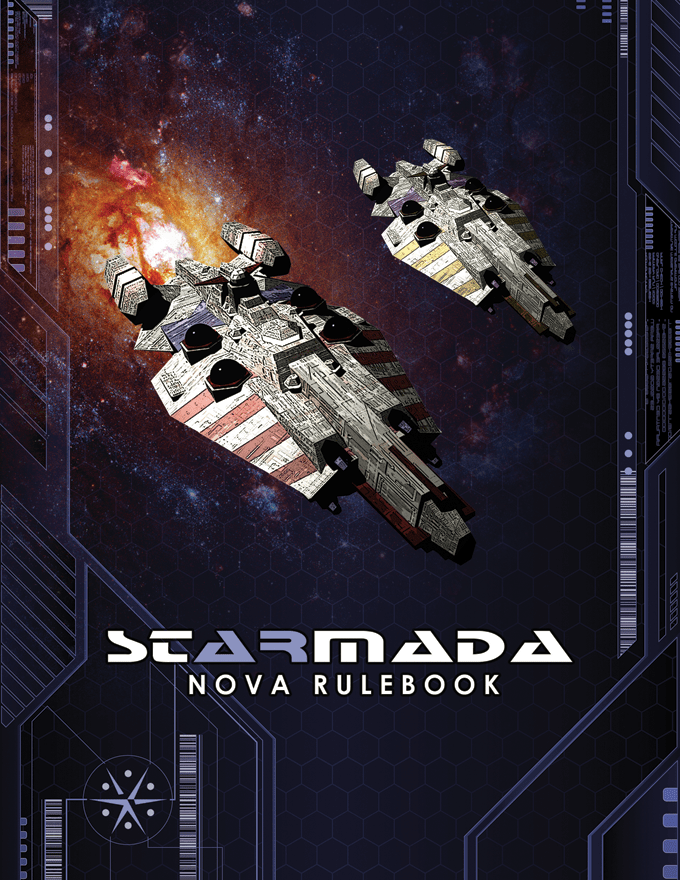
At long last, Cricket has announced the pre-release for the printed version of Nova, and pdf downloads have become available. Under normal circumstances, I'd be all over that... but I have a nasty programming project that I'm already burning late days on. Not going to download until I have written journal rollback for ext3 filesystems... Have to have incentives for success. Expect a review (hopefully) by next week.
Subscribe to:
Posts (Atom)